
How Much Protein Do You Actually Need When Losing Weight?
Key Points
- The long-standing recommended dietary allowance of 0.8 grams of protein per kilogram of body weight per day is not sufficient for someone actively losing weight.
- Current 2026 nutrition guidance recommends 1.6 to 2.2 grams of protein per kilogram of body weight per day during active weight loss to protect lean muscle mass.
- Without adequate protein, a significant portion of weight lost during a caloric deficit can come from muscle rather than fat, which slows metabolism and makes long-term maintenance harder.
- Protein is especially critical for patients on GLP-1 medications like Wegovy or Zepbound, because dramatically reduced appetite can make hitting daily protein targets a real challenge.
- Nova Physician Wellness Center's registered dietitians and certified nutrition specialists work with every patient to build individualized nutrition plans that account for their specific protein needs throughout treatment.
- Most major insurance plans are accepted, including Medicare and Medicaid.
Ask ten people how much protein you should eat while losing weight and you will get ten different answers. High protein. Moderate protein. More than you think. Less than the influencer told you. It is one of the most debated topics in nutrition, and the conflicting advice can make it nearly impossible to know what to actually do.
Here is what we know from the current evidence: most people trying to lose weight are not eating enough protein, and the standard dietary guidelines that have been quoted for decades are not designed with active weight loss in mind.
This matters more than most people realize. Getting protein right during weight loss is one of the most powerful things you can do to protect your results, preserve your muscle, and keep your metabolism working in your favor. And for patients on GLP-1 medications like Wegovy or Zepbound, it is especially critical.
Let us break it down.
Why the Old Protein Guidelines Fall Short
For years, the standard recommended dietary allowance for protein was 0.8 grams per kilogram of body weight per day. For a 180-pound person, that is roughly 65 grams of protein daily. That number has been the default reference point for decades, and you will still see it cited in many general health resources.
The problem is that this recommendation was established to prevent deficiency in the general population, not to support the specific demands of active weight loss. It does not account for the fact that when you are in a caloric deficit, your body is under physiological stress that dramatically increases the rate at which muscle protein is broken down.
In other words, the amount of protein that keeps a sedentary person at a stable weight is not the same amount that protects a person who is actively losing weight. And confusing the two has real consequences.
What the Current Evidence Actually Recommends
Current nutrition science for 2026 is specific: during active weight loss, the research supports a protein intake of 1.6 to 2.2 grams per kilogram of body weight per day to preserve lean muscle mass. For a 180-pound person, that is roughly 130 to 180 grams of protein daily. That is a meaningful and significant difference from the old standard.
This range is supported by multiple systematic reviews and is reflected in updated guidance from major sports medicine and obesity medicine organizations. It is also the range that nutritional counseling at Nova Physician Wellness Center is built around, individualized to each patient's weight, health status, activity level, and treatment plan.
The higher end of this range, around 2.0 to 2.2 grams per kilogram, tends to be most relevant for patients who are also doing resistance training, which is strongly encouraged during any medical weight loss program because of its effect on preserving and building lean muscle.
What Happens When You Do Not Get Enough Protein While Losing Weight
This is where the stakes become very real. When you are in a caloric deficit, your body needs to pull energy from somewhere. Ideally, that somewhere is stored fat. But if protein intake is insufficient and you are not sending strong signals to preserve muscle tissue, your body will also break down lean muscle for fuel.
This is called lean mass loss, and it matters for several reasons:
It slows your metabolism. Muscle tissue burns more calories at rest than fat tissue. Every pound of lean muscle you lose lowers your resting metabolic rate, meaning your body burns fewer calories even when you are doing nothing. Over time, this makes weight loss harder and weight regain much more likely.
It changes your body composition. Two people can lose the same number of pounds on a scale and end up with very different outcomes depending on how much of that loss was fat versus muscle. Preserving muscle while losing fat produces better health outcomes, better physical function, and a leaner appearance.
It contributes to the plateau problem. Many patients who hit a frustrating weight loss plateau are experiencing the effects of muscle loss and metabolic adaptation. Adequate protein intake is one of the most effective ways to reduce how often plateaus occur and how severe they are when they do.
It makes weight maintenance harder. Patients who enter their weight maintenance phase with more preserved lean muscle mass are significantly more likely to keep the weight off long term.
Why Protein Matters Even More on GLP-1 Medications
For patients on GLP-1 medications, hitting adequate protein targets is one of the most important and most challenging aspects of treatment, and it does not get talked about enough.
GLP-1 medications dramatically reduce appetite. For most patients, this is exactly the point. But when you are eating significantly less food overall, you may not be getting anywhere close to 1.6 to 2.2 grams of protein per kilogram of body weight each day without actively planning for it.
Clinical data from GLP-1 trials consistently shows that patients lose both fat and lean muscle during treatment, with the proportion of muscle loss increasing at higher doses and faster rates of weight loss. Patients who prioritize protein intake and combine their GLP-1 treatment with resistance training consistently show better lean mass preservation than those who do not.
This is one of the most important reasons that a comprehensive obesity treatment program includes registered dietitian support alongside medication management. Knowing you are on Wegovy and telling yourself to eat more protein are two very different things. Having a nutrition specialist actively building your meal plan around your protein needs, your food preferences, and your reduced appetite is what actually makes it happen.
What High-Protein Eating Actually Looks Like
Meeting a protein target of 1.6 to 2.2 grams per kilogram of body weight per day requires intentional planning but does not require an extreme or restrictive diet. Here are the practical foundations:
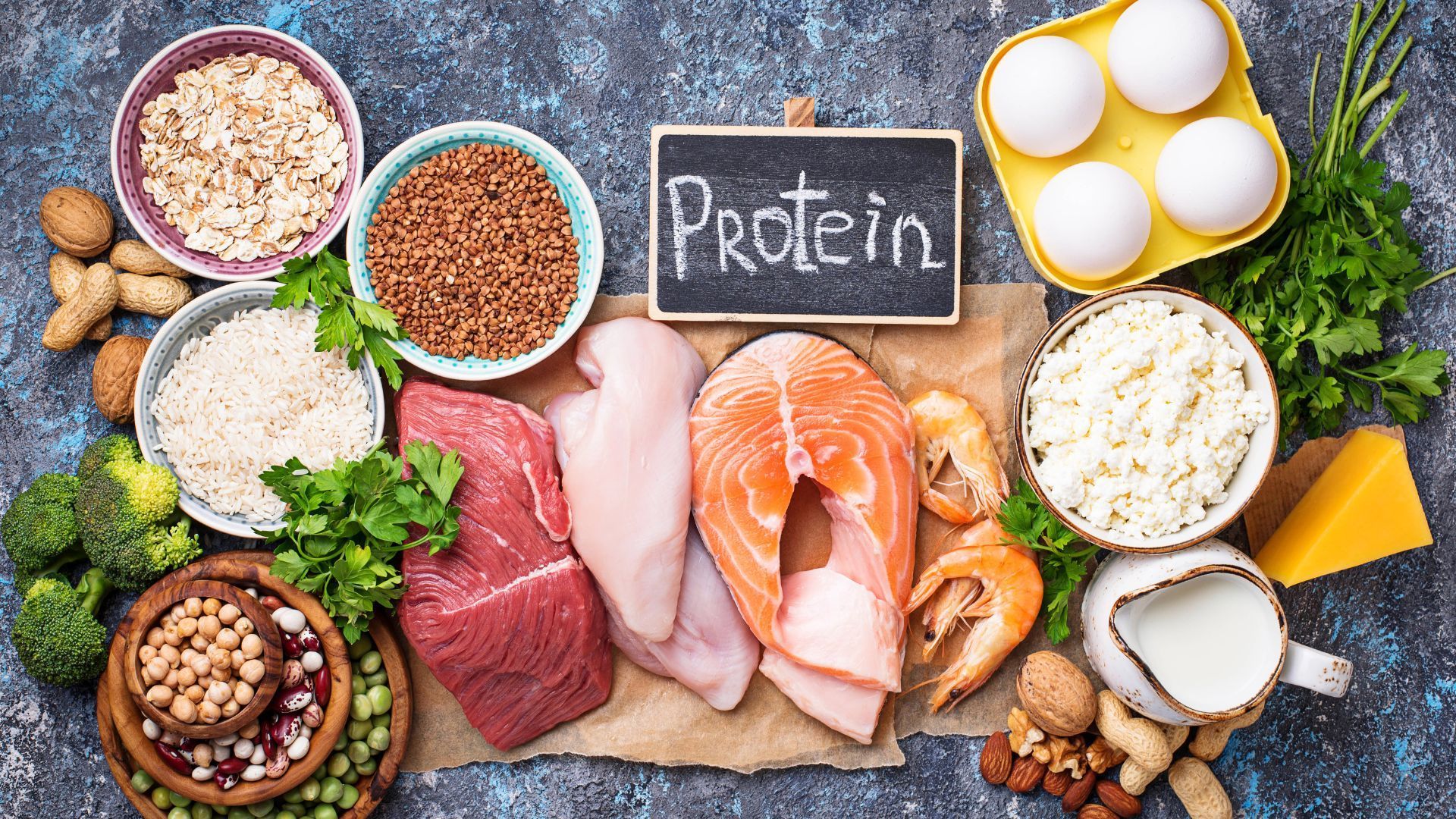
Prioritize protein at every meal. Rather than adding protein as an afterthought, structure your meals around the protein source first. Eggs, Greek yogurt, cottage cheese, lean meats, fish, tofu, tempeh, and legumes are all strong options. Your carbohydrate and fat intake builds around that foundation.
Spread intake throughout the day. Research shows that your body can only synthesize so much muscle protein from a single meal. Spreading protein across three to four meals throughout the day, rather than loading it all into one sitting, maximizes muscle protein synthesis.
Do not rely on protein supplements as your primary source. Protein shakes and bars can be useful tools, especially for patients on GLP-1 medications with reduced appetite, but whole food sources should form the foundation of your intake. Supplements fill gaps. They do not replace a well-structured nutrition plan.
Account for your starting weight, not your goal weight. Some sources recommend calculating protein targets based on goal body weight rather than current weight. This is a nuanced calculation that depends on your current body composition, how much weight you have to lose, and how aggressive your caloric deficit is. Your registered dietitian will help you determine the right target for your specific situation.
How Nova Physician Wellness Center Addresses Protein in Your Plan
At Nova Physician Wellness Center, our program is built on the understanding that nutrition is not one-size-fits-all. Every patient works with a registered dietitian or certified nutrition specialist who builds their meal plan around their individual protein needs, food preferences, cultural considerations, and dietary restrictions, including vegetarian, vegan, and gluten-free.
Your nutrition plan is not static. It is adjusted throughout your treatment as your weight changes, your medication dose changes, your activity level evolves, and your body composition data from InBody 570 testing reveals new information about your lean mass to fat ratio.
For patients on GLP-1 medications, our dietitians pay particular attention to protein adequacy, because the reduced appetite that makes the medication so effective can also make hitting protein targets genuinely difficult. Practical strategies for getting enough protein on a significantly reduced appetite are a core part of what our team provides.
We also screen for and treat fatty liver disease, which is closely tied to obesity and directly influenced by nutrition quality, including protein intake and the ratio of processed versus whole food sources in the diet.
The behavioral modification support our team provides also addresses the habits and thought patterns around eating that make consistent high-protein nutrition more or less likely to stick over time.
Find Nutrition Support for Weight Loss in Northern Virginia and Maryland
GLP-1 medication, and everything else life involves, you do not have to keep guessing. Getting individualized nutritional counseling from a registered dietitian who specializes in obesity medicine makes a measurable difference in both how much weight you lose and how well you keep it off.
Nova Physician Wellness Center has locations in Fairfax, Vienna, Arlington, Lansdowne, Sterling, Woodbridge, and Charlottesville in Virginia, and Rockville in Maryland. Telemedicine appointments are also available for patients across Virginia and Maryland who prefer virtual visits.
Most major insurance plans are accepted, including Medicare and Medicaid. You can verify your insurance coverage directly on our website.
Call (703) 865-6490 or visit novaphysicianwellness.com to schedule your consultation. New patients are always welcome.
Frequently Asked Questions About Protein and Weight Loss
How much protein should I eat per day to lose weight?
Current evidence supports a protein intake of 1.6 to 2.2 grams per kilogram of body weight per day during active weight loss to protect lean muscle mass. This is significantly higher than the general recommended dietary allowance of 0.8 grams per kilogram, which was designed to prevent deficiency in the general population rather than support active weight loss.
Can you eat too much protein while losing weight?
For most healthy adults, protein intakes in the range of 1.6 to 2.2 grams per kilogram of body weight per day are well within safe limits. Very high intakes beyond this range may put additional strain on the kidneys in people with pre-existing kidney disease, which is one of the reasons working with a physician and dietitian matters. Your provider will review your health history before making any specific recommendations.
Does protein help prevent weight loss plateaus?
Yes, in a meaningful way. Adequate protein intake protects lean muscle mass, which keeps your resting metabolic rate higher as you lose weight. It also has the highest thermic effect of any macronutrient, meaning your body burns more calories digesting it than it does digesting fat or carbohydrates. Both of these effects help reduce the likelihood and severity of plateaus.
What should I do if I want to stop my GLP-1 medication?
The most important step is to talk with your physician before stopping. Together, you can develop a transition plan that includes a structured nutrition approach, physical activity targets, behavioral support, and a monitoring schedule to catch any early regain before it becomes significant.
How much protein should I eat if I am on Ozempic or Wegovy?
The protein target on GLP-1 medications is the same as for weight loss generally, 1.6 to 2.2 grams per kilogram of body weight per day, but it is harder to hit because of dramatically reduced appetite. Working with a registered dietitian who can build your meal plan around this target is especially important on GLP-1 therapy.
What are the best high-protein foods for weight loss?
Strong options include eggs, Greek yogurt, cottage cheese, chicken breast, turkey, lean beef, fish, shrimp, tofu, tempeh, edamame, and legumes like lentils and chickpeas. Protein shakes and bars can help fill gaps, particularly on reduced-appetite days, but whole food sources should form the foundation of your intake.
Does Nova Physician Wellness Center provide nutrition counseling as part of weight loss treatment?
Yes. Every patient at Nova Physician Wellness Center has access to registered dietitians and certified nutrition specialists who build individualized meal plans as part of the comprehensive treatment program. Nutritional counseling is a core component of care, not an optional add-on.
FAQs About Nova Physician Wellness Center
What does Nova Physician Wellness Center specialize in?
Nova Physician Wellness Center is an obesity treatment practice focused exclusively on medically supervised weight loss. The care team includes board-certified obesity medicine physicians, board-certified nurse practitioners, registered dietitians, certified nutrition specialists, and behavioral health professionals.
Where are your locations?
The practice has locations in Fairfax, Lansdowne, Vienna, Arlington, Charlottesville, Sterling, and Woodbridge in Virginia, and Rockville, Maryland. Telemedicine appointments are also available for patients across Virginia and Maryland.
What insurance plans do you accept?
Nova Physician Wellness Center accepts most major insurance plans, including Medicare and Medicaid. Accepted carriers include Aetna, Blue Cross Blue Shield, Cigna, United Healthcare, Humana, Tricare, CareFirst, Anthem, Coventry, Innovation Health, MultiPlan/PHCS, and Sentara. Visit our insurance page to verify your specific coverage.
How do I get started?
Call (703) 865-6490 or visit novaphysicianwellness.com to request informationCall (703) 865-6490 or visit novaphysicianwellness.com to schedule a consultation. New patients are always welcome.or book a consultation online.
Disclaimer: The information provided on this blog is for general informational purposes only and is not intended as, and should not be considered, medical advice. All information, content, and material available on this blog are for general informational purposes only. Readers are advised to consult with a qualified healthcare professional for medical advice, diagnosis, or treatment. The author and the blog disclaim any liability for the decisions you make based on the information provided. Always seek the advice of your physician or other qualified health provider with any questions you may have regarding a medical condition.