
GLP-1 Side Effects: What to Expect and How a Physician Helps You Manage Them
Key Points
- GLP-1 medications like semaglutide (Wegovy, Ozempic) and tirzepatide (Zepbound, Mounjaro) are highly effective for weight loss, and most side effects are manageable with the right medical support.
- The most common side effects are digestive in nature, including nausea, vomiting, diarrhea, and constipation, and they are most noticeable in the first two to four weeks of treatment.
- Temporary hair thinning reported by some patients is most likely related to rapid weight loss itself rather than the medication directly, and it typically resolves within a few months.
- Long-term clinical trial data shows a well-established safety profile for GLP-1 medications when used under physician supervision.
- A board-certified obesity medicine physician customizes your dosing schedule, monitors your labs, and adjusts your plan to minimize side effects and keep you on track.
- Nova Physician Wellness Center serves patients across Northern Virginia and Rockville, Maryland, and accepts most major insurance plans including Medicare and Medicaid.
If you have been researching GLP-1 medications for weight loss, you have probably come across some unsettling stories. Nausea so severe people could not eat. Fatigue that dragged on for weeks. Hair thinning. Stomach problems that sent people running to the bathroom. It is enough to make anyone hesitant.
Here is what those stories often leave out: most side effects from GLP-1 medications are real, but manageable. And the difference between a patient who struggles through them and one who barely notices them often comes down to one thing: whether they have a qualified physician guiding the process.
This post walks you through the most common GLP-1 side effects honestly, what causes them, how long they tend to last, and exactly how a board-certified obesity medicine physician helps you navigate them safely.
What Are GLP-1 Medications and Why Do They Cause Side Effects?
GLP-1 medications, including semaglutide (Wegovy and Ozempic) and tirzepatide (Zepbound and Mounjaro), work by mimicking a natural gut hormone that regulates hunger, blood sugar, and digestion. They slow gastric emptying, which means food moves through your stomach more slowly. They also act on receptors in the brain to reduce appetite.
These are powerful effects, and they explain why the most common side effects are digestive in nature. Your gastrointestinal system is adjusting to a significant change in how it processes food, particularly in the early weeks of treatment.
The good news is that this adjustment period is temporary for most patients. And with the right physician oversight, it is much easier to get through than you might expect.
The Most Common GLP-1 Side Effects
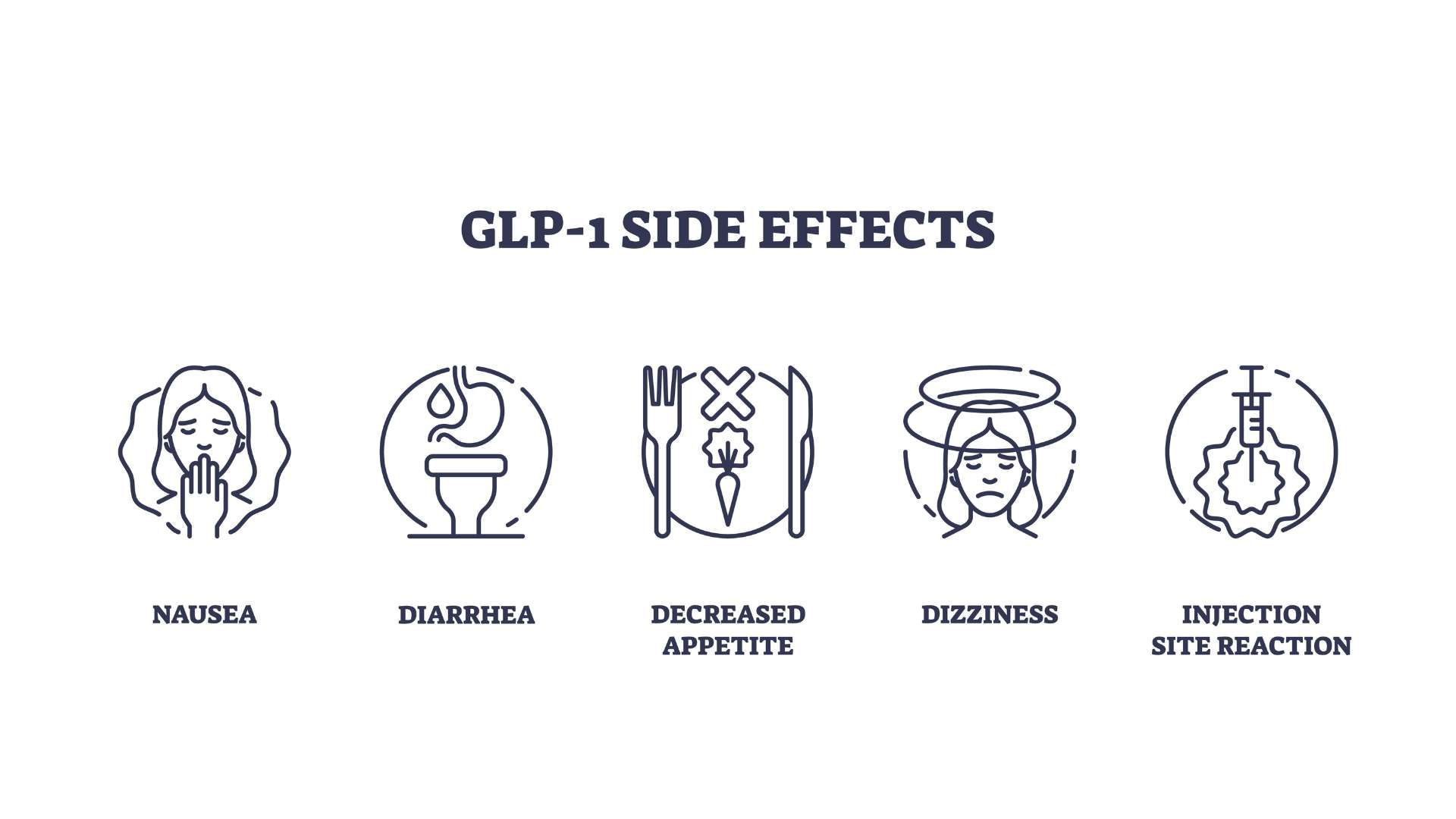
Here are the side effects most commonly reported by patients taking GLP-1 medications, along with what typically causes them and what helps.
Nausea
This is the most frequently reported side effect, especially in the first two to four weeks. It happens because the medication slows stomach emptying. Eating smaller meals, avoiding fatty or spicy foods, and not lying down immediately after eating all help significantly. For most patients, nausea improves notably after the first month.
Vomiting
Less common than nausea, but it does occur in some patients early on. It is usually a signal that the dose needs to be adjusted or that some dietary changes would help. Your physician can slow the dose escalation schedule if needed.
Diarrhea or Constipation
Some patients experience one or the other as their digestive system adjusts to the medication. Staying well hydrated and maintaining adequate fiber intake helps with both. These symptoms typically ease within the first few weeks.
Fatigue
Some patients feel unusually tired in the first few weeks of treatment. This often improves as the body adapts and as weight loss begins to produce more energy over time. Making sure you are eating enough protein and staying hydrated also plays a role in keeping energy levels up.
Reduced Appetite
This is technically the intended effect of the medication, but some patients find the appetite reduction more dramatic than expected, especially early on. Your physician and registered dietitian will help make sure you are still getting adequate protein and essential nutrients even when your appetite is significantly reduced.
Injection Site Reactions
Some patients experience mild redness, bruising, or discomfort at the injection site. Rotating injection sites with each dose reduces this significantly and keeps any one area from becoming irritated.
How Long Do GLP-1 Side Effects Last?
For most patients, the most noticeable side effects occur in the first two to four weeks of treatment, particularly when starting at the initial low dose. As the body adjusts and the dose is increased gradually, side effects typically become less frequent and less intense.
The gradual dose escalation protocol used in physician-supervised programs is specifically designed to minimize the severity of side effects. This is one of the most important reasons that medically supervised GLP-1 treatment produces better outcomes and higher medication adherence than self-managed or online-only approaches.
If side effects are severe, persistent, or significantly affecting your quality of life, your physician can slow the dose escalation schedule, adjust the timing of your injections, or make specific dietary recommendations to reduce the impact. You should never feel like you have to just push through it on your own.
Can GLP-1 Medications Cause Hair Loss?
This is one of the most commonly searched questions about GLP-1 medications, and the honest answer requires a little nuance.
Some patients do experience temporary hair thinning while taking GLP-1 medications. However, research suggests this is most likely related to rapid weight loss itself rather than the medication specifically. The medical term is telogen effluvium, a temporary disruption of the normal hair growth cycle triggered by significant physiological changes, including rapid calorie restriction or rapid weight loss of any kind.
The good news is that telogen effluvium is typically temporary and resolves within several months as the body stabilizes. A physician-supervised program that emphasizes adequate protein intake, proper nutrition, and a moderate, sustainable rate of weight loss significantly reduces the likelihood of this occurring in the first place.
What Does the Long-Term Safety Data Show?
GLP-1 medications have been studied in some of the largest and longest weight management clinical trials ever conducted. The STEP trials for semaglutide and the SURMOUNT trials for tirzepatide each enrolled tens of thousands of participants over periods of one to two years.
The long-term safety data shows a well-established profile for these medications when used under appropriate physician supervision. The most significant concerns flagged in research involve a small potential risk of certain thyroid tumors in people with a personal or family history of specific thyroid cancers, as well as a risk of pancreatitis in those with pre-existing risk factors. This is precisely why a complete medical history is essential before starting GLP-1 therapy.
It is also worth noting that the cardiovascular data for GLP-1 medications is strongly positive. Studies have shown that semaglutide significantly reduces the risk of major cardiovascular events in patients with obesity and existing heart disease, which is a meaningful benefit for many patients who come to Nova Physician Wellness Center seeking help.
Why Physician Supervision Changes the Side Effect Experience
The difference between a difficult GLP-1 experience and a successful one often comes down to the level of medical oversight involved. Here is what physician supervision at Nova Physician Wellness Center provides that no online pharmacy or mail-order service can match:
- A complete medical evaluation before starting treatment to rule out contraindications and identify any risk factors specific to your health history.
- A personalized dosing schedule that starts low and increases gradually based on your individual response and tolerance.
- Nutritional guidance from a registered dietitian or certified nutrition specialist that protects lean muscle mass, ensures adequate protein, and reduces the likelihood of hair thinning.
- Regular follow-up visits where your physician reviews your lab work, assesses your progress, and adjusts your plan as your needs change.
- Direct access to your care team when side effects arise, so problems are addressed quickly before they become reasons to stop treatment.
At Nova Physician Wellness Center, every patient on GLP-1 therapy is monitored by a board-certified obesity medicine physician throughout their treatment. You are never managing this alone.
Find a GLP-1 Physician in Northern Virginia and Maryland
Nova Physician Wellness Center serves patients across Northern Virginia and Maryland with board-certified obesity medicine care. Our multidisciplinary team includes physicians, nurse practitioners, registered dietitians, certified nutrition specialists, and behavioral health professionals working together to make your treatment as smooth and effective as possible.
We have locations near you in Fairfax, Vienna, Arlington, Lansdowne, Sterling, Woodbridge, and Charlottesville in Virginia, and Rockville in Maryland. We accept most major insurance plans, including Medicare and Medicaid, and assist with prior authorization for GLP-1 medications.
Ready to find out if a GLP-1 medication is right for you? Call us at (703) 865-6490 or visit novaphysicianwellness.com to book your consultation. New patients are always welcome.
Frequently Asked Questions About GLP-1 Side Effects
What are the most common side effects of GLP-1 medications?
The most common side effects include nausea, vomiting, diarrhea, constipation, and fatigue. These occur most often in the first few weeks of treatment and typically improve as your body adjusts. Eating smaller, lower-fat meals and staying well hydrated are among the most effective ways to manage them early on.
How long do GLP-1 side effects last?
For most patients, GLP-1 side effects are most noticeable in the first two to four weeks of treatment and improve significantly after that. The gradual dose escalation used in physician-supervised programs is specifically designed to reduce the severity and duration of side effects.
Can GLP-1 medications cause hair loss?
Some patients experience temporary hair thinning during significant weight loss on GLP-1 medications. This is most likely caused by rapid weight loss itself rather than the medication directly. It is typically temporary and resolves within a few months. Adequate protein intake and a moderate rate of weight loss significantly reduce the likelihood of this occurring.
Are GLP-1 medications safe long-term?
GLP-1 medications have been studied in large clinical trials over multiple years and have a well-established safety profile when used under physician supervision. Regular monitoring by a board-certified physician is essential for catching any concerns early and ensuring continued safety throughout treatment.
What happens if GLP-1 side effects are too severe?
If side effects are severe or significantly affecting your quality of life, your physician can adjust your dosing schedule, slow the dose escalation, recommend dietary changes, or explore alternative treatment options. This is exactly why working with a physician rather than a mail-order prescription service makes such a meaningful difference in outcomes.
Does Nova Physician Wellness Center prescribe GLP-1 medications?
Yes. Our providers evaluate each patient individually to determine whether a GLP-1 medication is appropriate for their health profile. We accept most major insurance plans and assist with prior authorization. We serve patients in Fairfax, Vienna, Arlington, Lansdowne, Sterling, Woodbridge, and Charlottesville in Virginia, and Rockville, Maryland.
FAQs About Nova Physician Wellness Center
What does Nova Physician Wellness Center specialize in?
Nova Physician Wellness Center is an obesity medicine practice focused exclusively on medically supervised weight loss. The care team includes board-certified obesity medicine physicians, board-certified nurse practitioners, registered dietitians, certified nutrition specialists, and behavioral health professionals.
Where are your locations?
The practice has locations throughout Northern Virginia, including Fairfax, Lansdowne, Vienna, Arlington, Charlottesville, Sterling, and Woodbridge, as well as a location in Rockville, Maryland.
Does the practice offer telehealth appointments?
Yes. Nova Physician Wellness Center offers telehealth and telemedicine appointments for patients who prefer to be seen remotely across Virginia and Maryland.
What insurance plans do you accept?
Nova Physician Wellness Center accepts most major insurance plans, including Medicare and Medicaid. Accepted carriers include Aetna, Blue Cross Blue Shield, Cigna, United Healthcare, Humana, Tricare, CareFirst, Anthem, Coventry, Innovation Health, MultiPlan/PHCS, and Sentara. Contact the office to confirm your specific coverage.
How do I schedule an appointment?
Call (703) 865-6490 or visit novaphysicianwellness.com to request information or book a consultation online.
Disclaimer: The information provided on this blog is for general informational purposes only and is not intended as, and should not be considered, medical advice. All information, content, and material available on this blog are for general informational purposes only. Readers are advised to consult with a qualified healthcare professional for medical advice, diagnosis, or treatment. The author and the blog disclaim any liability for the decisions you make based on the information provided. Always seek the advice of your physician or other qualified health provider with any questions you may have regarding a medical condition.